 DIY Proof
Best home thermostats 2026: four picks and the EU compatibility catch
Four thermostats came out ahead in the 2026 round-up, and the one that suits your house depends on your boiler. Here is what each pick solves, plus the checks to run before you order.
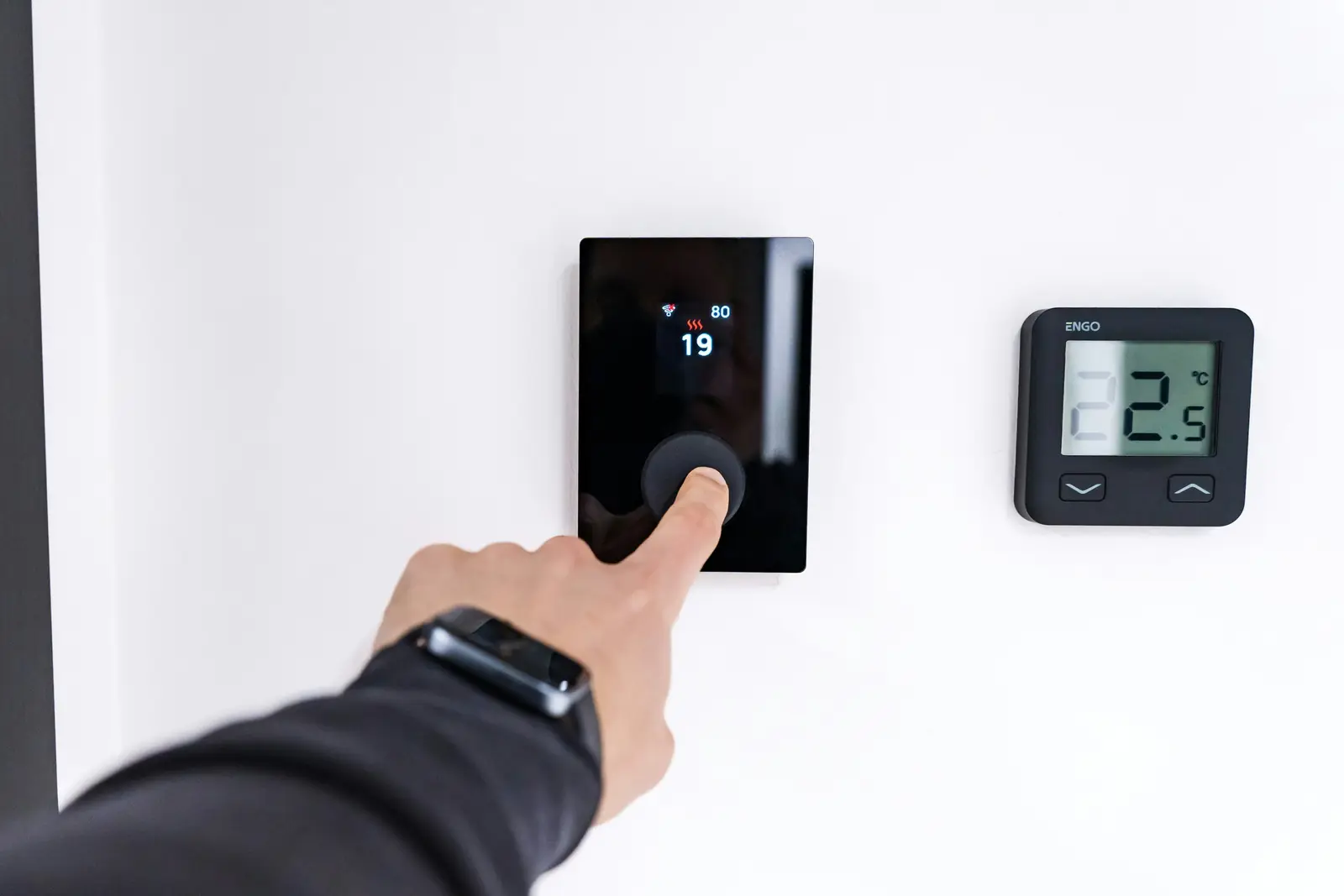
The best home thermostat for 2026, judged on the latest round-up review, is the Google Nest Learning Thermostat (Gen 4). Bob Vila's tester ranked it top overall for straightforward installation, adaptive scheduling and controls that don't need a manual. The Amazon Smart Thermostat took the value slot, the Honeywell Home T9 took the room-sensor slot, and the Emerson non-programmable took the simplest-of-the-lot slot. If you have a European combi boiler and radiators, the compatibility check comes before any of that.
The four picks and what each one solves
- Google Nest Learning Thermostat (Gen 4). Best overall. It learns a schedule from the way you use the heating, and the controls are quick to pick up.
- Amazon Smart Thermostat. Best value. Voice control through Alexa and energy tracking in the app.
- Honeywell Home T9. Best with remote sensors. It holds the temperature in the room you nominate rather than in the hallway where the unit is mounted.
- Emerson non-programmable single-stage. Best basic. Manual, no app, one heating stage.
Read the four as answers to four different questions: how little do I want to think about this, how little do I want to spend, which room is cold, and do I want an app at all. A house with a fixed routine and a badly timed boiler wants the cheap one. A house where nobody is home at the same time twice wants the learning one.
The European catch: 24V heating versus a combi boiler
Three of those four are North American products built around a 24V control circuit, the low-voltage wiring that runs a forced-air furnace or a heat pump. A European combi boiler usually switches on a 230V live or over an OpenTherm pair, and the thermostat has to work with whatever is already on your wall. Read the compatibility list for your boiler's make and model before you order, and check the voltage printed on the box. A listing that talks only about furnaces, heat pumps and C-wires is a US unit, whatever currency the shop shows.
Nest has sold its European thermostats with a Heat Link module that handles the boiler switching, and that bundle is the version to look for if your boiler needs a volt-free or 230V contact. Ask the seller which version they are shipping. Returning a thermostat across a border is a slow way to fix a compatibility mistake.
A room sensor fixes a cold room, not a bad schedule
A thermostat measures the temperature where it is screwed to the wall, usually a hallway. If the bedroom faces north, the hall can sit at 20°C while you work in a jumper. The T9's remote sensors let you decide which room counts at which hour, which is a comfort fix more often than an energy fix. For one stubbornly cold room, a space heater may be the cheaper answer.
What to check before you order
- Boiler make, model and control type. Look in the installation manual for on/off, OpenTherm or a proprietary bus, or ask the engineer who services it.
- Wiring at the old thermostat. Count the cores and work out whether one is a permanent live. A two-core cable with no neutral limits what will run.
- Radiator valves. A thermostat fires the boiler; it does not control rooms. Without smart TRVs you still heat the whole house to the hall's temperature.
- Tenancy. In a rented flat, get the landlord's agreement before you change heating controls.
- Region on the box. Check the app's region, language and voltage, not just the shop listing.
Fitting one: tools, time and the order of work
A battery-powered thermostat that fits the existing backplate is an hour's work with a screwdriver. Anything that puts a receiver or Heat Link on the boiler involves mains wiring, which is regulated work in most of Europe and belongs with an electrician or a heating engineer.
- Time:
- 30 to 60 minutes for a battery-powered swap; 1.5 to 2 hours if a receiver goes on the boiler
- Difficulty:
- Beginner for a battery unit that reuses the old backplate; qualified electrician or heating engineer for anything on 230V
- Cost:
- The price of the unit plus one hour of an electrician or heating engineer if the boiler has to be wired. The 2026 review does not publish EUR prices, so compare at EU retailers before you commit.
Tools: Small flathead screwdriver, Phillips screwdriver, Two-pole voltage tester, Drill with a 6mm masonry bit, Spirit level, Phone camera
Materials: Thermostat kit with its backplate, Heat Link or receiver if your boiler needs one, Wall plugs and screws, Cable connector block, Masking tape and a pen for labelling cores
- 01
Photograph the old wiring
Take a picture of the terminals with the cores still in place, then label each core with tape and a letter. New terminals are rarely labelled like the old ones, and the photo is what saves you halfway through.
- 02
Isolate the heating circuit
Switch the boiler off at its spur and prove the cable dead with the voltage tester. Test between live and neutral, then live and earth. Do this even if you think the thermostat is battery powered.
- 03
Remove the old unit and check the backplate
Unscrew the old thermostat and see whether the new backplate matches the screw holes and cable entry. If it does, keep the old plate and skip the drilling.
- 04
Mount the new backplate level
Aim for about 1.5m from the floor on an internal wall in the room you use most. Keep it out of direct sun, away from a radiator and away from the draught of a front door.
- 05
Connect the cores
Match each labelled core to the terminal named in the new instructions. If the labels don't match, stop and check the boiler wiring diagram rather than guessing.
- 06
Power up and test a full cycle
Restore the spur, let the unit boot, then call for heat and confirm the boiler fires and stops on the set point. Run one complete cycle before you put the tools away.
- 07
Set the schedule last
Enter your real routine, including the days nobody is home. A thermostat with a wrong schedule performs worse than the old dial it replaced.
What usually goes wrong
The most common failure is a unit that powers up and never fires the boiler, because the switching circuit does not match. It looks like a dead thermostat and it is a wiring mismatch. That is the mistake the compatibility check at the start is there to prevent.
The second is mounting position. A thermostat above a radiator, beside a front door or in sun through a window reads a number that has nothing to do with your comfort, and the boiler will cycle all day chasing it.
The third is a schedule nobody follows. If the household is out at different times every day, the learning models earn their price. If someone is home most of the day, a fixed 20°C with a night setback does the same job for less money.
Which one I would fit
Start with the boiler, then buy the thermostat that talks to it. If the boiler takes OpenTherm and you want the learning schedule, the Nest bundle is the strongest of the four. If the problem is one cold room, the T9's sensors address it directly and you skip the guesswork. The Amazon unit is the value pick in its home market, so confirm European availability and voltage before you plan around it. The Emerson is for a workshop, a holiday let or anyone who genuinely wants a dial.
Frequently asked questions
- Do smart thermostats actually save money?
- They save where the old schedule was sloppy, for example heating an empty house all day. They save little in a home that was already timed well. The bigger gains usually come from TRVs, insulation and a lower set point.
- Can I fit a smart thermostat myself?
- Yes if it is battery powered and reuses the existing backplate. No if a receiver or Heat Link has to be wired into the boiler, because that is mains work. In most of Europe an electrician or heating engineer does that part.
- Will a US thermostat work on a European boiler?
- Usually not without an adapter. US units switch a 24V circuit, while European combi boilers typically take a 230V switched live or an OpenTherm pair. Check your boiler's control type before you buy.
- Is the Nest Gen 4 worth it over a basic thermostat?
- If your household keeps irregular hours, yes. The learning schedule replaces a timetable you would otherwise rewrite every few weeks. If your routine is fixed, a basic programmable unit covers the same ground for a lot less.
Sources
Next projects
Best smart thermostat 2026: 8% off the bill, at €75 or €230
The ecobee Smart Thermostat Premium is the best smart thermostat for most homes at about €230. What decides your install is a C-wire, and in Europe, the boiler.

SwitchBot K11+ Pro review: a 9 cm robot built for under the sofa
SwitchBot's K11+ Pro is a 9.1 cm robot vacuum that gets under sofas and beds where bigger bots stop, with a 4 L bag rated for 90 days. Mopping is light duty.

Holiday gift deals: you need a price history before you buy
The Roborock Qrevo Edge 3 Pro at $999.99 is the one gift deal here with a checkable price drop. What the rest of the list is worth, and how to test a 'was' price before you pay.