 DIY Proof
Bathroom wall color ideas: what looks wrong under warm light
Small bathrooms live or die by the bulb above the mirror. How to test a wall color properly, which finish wipes clean, and the prep that decides whether the result looks flat.
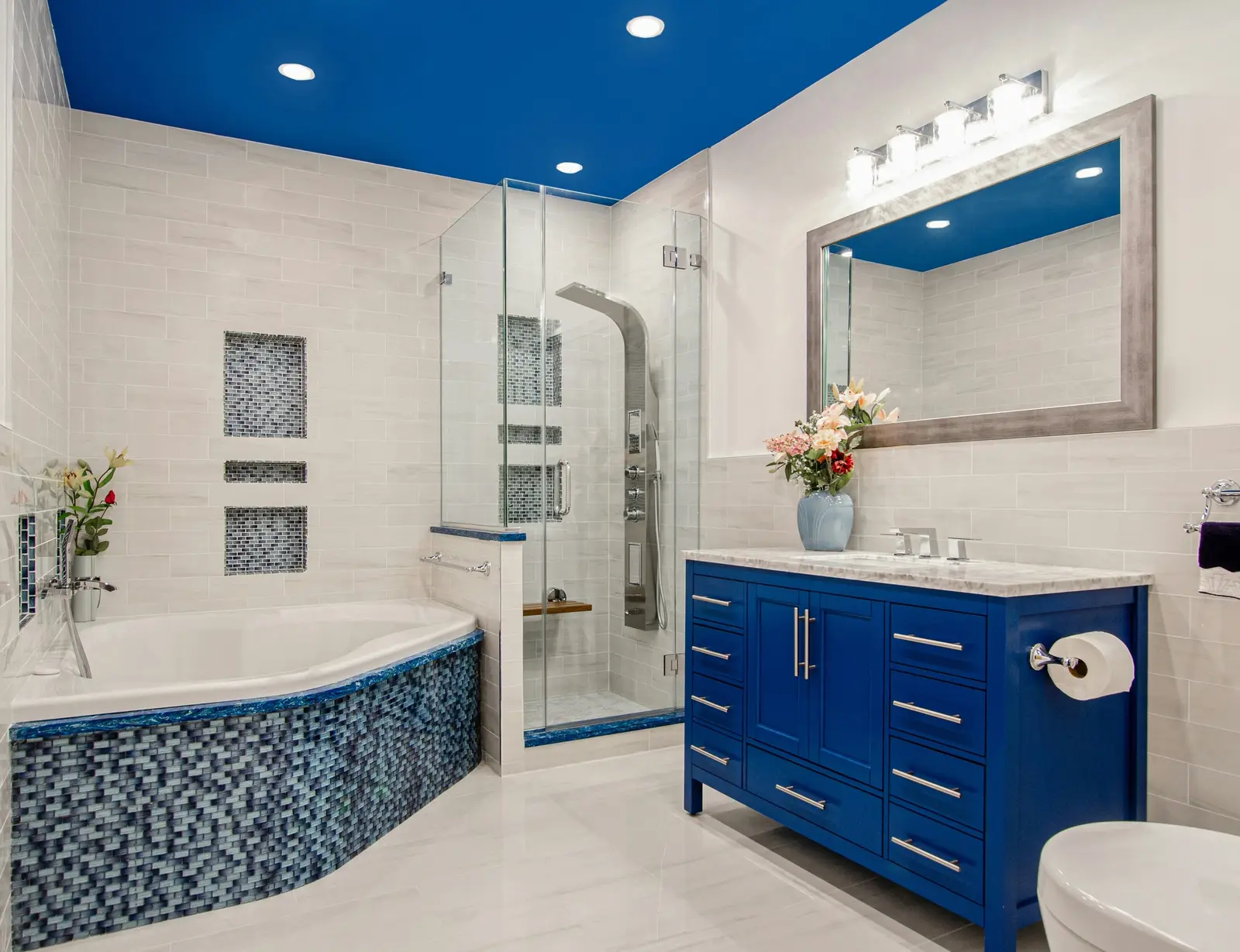
The fastest way to pick a bathroom wall color is to stop trusting the paint chip and test the color on your own wall, at night, under the bulb that will actually be in the room. Light drives the result in a small space, and a bathroom is the smallest, brightest, most reflective room in most homes. A gray-blue that looks calm in the shop can read green against beige tiles and a warm bulb.
Start with the bulb, then the tile
The fixture above your mirror does more to that wall than the name on the tin. Bulbs sold in Europe are usually labelled 2700K for warm white or 4000K for neutral, and a warm bulb pulls every color toward yellow while a neutral one pulls it toward blue. Most windowless bathrooms have a single light source, so the wall gets one steep, hard beam and no daylight to balance it. If your tiles are cream or beige, a cool wall color will fight them all evening. If the tiles are white or gray, a very warm color can look muddy compared with the shop.
Take a photo of the room on your phone, decide whether the tiles read warm or cool, and pick colors from the same side of that line. It is a two-minute job that saves a repaint.
The lime green bathroom that ended up gray-blue
Luci LaFuria's half bath in her New York apartment was bright green when she and her husband bought the place, and she dates the room to the late 1990s. Their first move was to have the whole apartment painted white, which held up until it didn't. "It felt really boring and sterile," she told Apartment Therapy. The second attempt was a soft gray-blue, with box molding on the lower wall to give the small room some structure. She gathered inspiration photos, picked a direction, and joined the Spring One Room Challenge to force a schedule onto each stage of the work.
The useful part of that story is the middle step. White is the default because it seems safe, and in a room with one bulb, no window and a lot of shiny surface, safe turns flat. White also shows every splash, every hairline crack in the plaster, and every patch where the filler dried slightly proud of the wall.
Colors that hold up in a small, wet room
Gray-blue is the reliable choice. It sits on the cool side, so it looks close to the same under a warm bulb and a neutral one, and it works with white sanitaryware and chrome. Warm off-white and pale sand suit cream tiles, but go one shade darker than feels right, because a small room with hard surfaces washes color out. Mid-tone greens and deep teals earn their place in a powder room with no shower, where steam is not a daily problem. Clay and pale pink fit older apartments with colored tiles, where a gray-blue would look like a mistake someone made in a hurry.
As for depth, a dark wall in a powder room makes the space feel deliberate. In a shower room with one bulb, dark paint absorbs light you do not have, so keep the ceiling and the tiles pale and leave the drama for a room nobody undresses in.
One detail worth stealing: carry the wall color onto the ceiling in a matt finish. In a low-ceilinged bathroom a white ceiling and a colored wall create a hard line at the top, and the room looks shorter than it is. The same color above your head, in matt, removes the line.
Finish and prep decide the result
Paint sold in Europe as moisture resistant or kitchen and bathroom comes in matt, satin and eggshell. Satin and eggshell wipe clean, which matters on the wall beside the basin and around the shower. Matt hides the lumpy patches in an old wall and belongs on the ceiling. Gloss on a bathroom wall shows every ripple in the plaster and every dried splash, and you will notice it within a month.
Prep decides how the job looks, and the list in a bathroom is short: wash the walls to get the soap and hairspray off, fill the holes, sand the filler flat, then prime. If the room is mid renovation, finish the tile, the storage and the fan first, because paint is the last thing that should go on. Ask for the primer to be tinted toward the new color when you are covering a strong one. A mid blue rolled straight over lime green will take more coats than the tin claims, and the green will show through in side light for weeks.
In a room with no window, the extractor fan does more for the paint than the paint does. Condensation on a wall that never dries will blister the finish, whatever the label says. Check that the fan runs and that the duct is actually connected before you open a can.
How to test a color before you buy a big tin
Buy two or three sample pots in the colors you are considering, in roughly the same sheen as the topcoat you plan to buy. Paint a patch about the size of your hand on two walls, one beside the mirror and one in a corner, give it two coats, and let it dry properly. Look at the patches in the morning with the light off and again at night with the light on and the door shut. Keep the one that still looks right both times, which is usually the one that looked dullest in the shop.
What usually goes wrong
- Choosing the color in a shop under shop lighting and expecting it to look the same at home.
- Painting over a saturated wall without a tinted primer, then needing four coats to cover it.
- Using gloss on walls that are not perfectly flat, because gloss shows every ridge.
- Painting the walls before the ceiling, so the ceiling paint lands on fresh topcoat.
- Skipping the wash-down, so the paint sticks to soap residue and peels at the edges.
- Testing in a matt sample pot and buying satin for the topcoat, then wondering why the finished wall reads darker.
- Time:
- A weekend, with overnight drying between the primer and the topcoats.
- Difficulty:
- Beginner. The skills are filling, sanding and cutting in a straight line.
- Cost:
- The source project does not publish a total. Budget for one tin of bathroom paint, a small tinted primer, filler and tape; in a half bath the paint is the main line.
Tools: Filling knife, Sanding block with 120-grit paper, 50 mm masking tape, Short-pile roller and tray, 50 mm angled brush for cutting in, Dust sheet, Step stool
Materials: Moisture-resistant bathroom paint in satin or eggshell, Tinted primer, Flexible filler, Two or three sample pots
- 01
Clear the room and wash the walls
Take down the mirror and shelf, cover the floor, and wash the walls with sugar soap, then rinse with clean water. Paint will not bond to hairspray or soap film.
- 02
Fill and sand
Press flexible filler into holes and cracks, let it set, sand it flush with 120-grit, and dust the wall down. Run a hand over the patches; anything you can feel will show under satin.
- 03
Mask and cut in
Tape the tile line, the trim and the sanitaryware, pressing the tape edge down hard. Cut in the edges with the angled brush and keep the band narrow so the roller can cover the rest.
- 04
Prime
Roll one coat of primer, tinted toward the new color if you are covering something strong, and leave it overnight.
- 05
Two topcoats
Roll in overlapping W shapes to keep a wet edge, then lay off in straight lines. Add the second coat after the drying time on the tin, not before.
- 06
Pull the tape and refit
Remove the tape while the paint is still slightly soft so it does not tear the edge, then refit the mirror and shelf and run the extractor fan.
Frequently asked questions
- What is the best wall color for a small bathroom?
- A pale gray-blue or a warm off-white, one shade darker than feels right. Both hold their color under warm and neutral bulbs and sit well with white sanitaryware. Paint a patch and check it at night before you buy the big tin.
- Should bathroom walls be matt or satin?
- Satin or eggshell on the walls, matt on the ceiling. Satin wipes clean where the basin splashes; matt hides the unevenness in an old ceiling. Avoid gloss on walls unless the plaster is perfect.
- Do I need special bathroom paint?
- Yes if the room has a bath or shower and no window. Paint labelled moisture resistant or kitchen and bathroom resists mould on the film better than standard emulsion. The extractor fan still matters more than the label.
- Can I paint over dark green walls without primer?
- You can, and you will need extra coats. A primer tinted toward the new color gets you to an even finish in two topcoats. Skipping the primer is the most common reason a pale bathroom wall ends up patchy.
- Does a dark color make a small bathroom feel smaller?
- In a powder room, no: it makes the room feel intentional. In a shower room with one bulb, a dark wall swallows light, so keep the ceiling and tiles pale and make sure the fan works.
- How many coats does a bathroom wall need?
- Two topcoats over a primer, three if you skipped the primer or the wall is porous. Let each coat dry for the time on the tin. A second coat over a tacky first one gives you a wall that never hardens properly.
Sources
Next projects
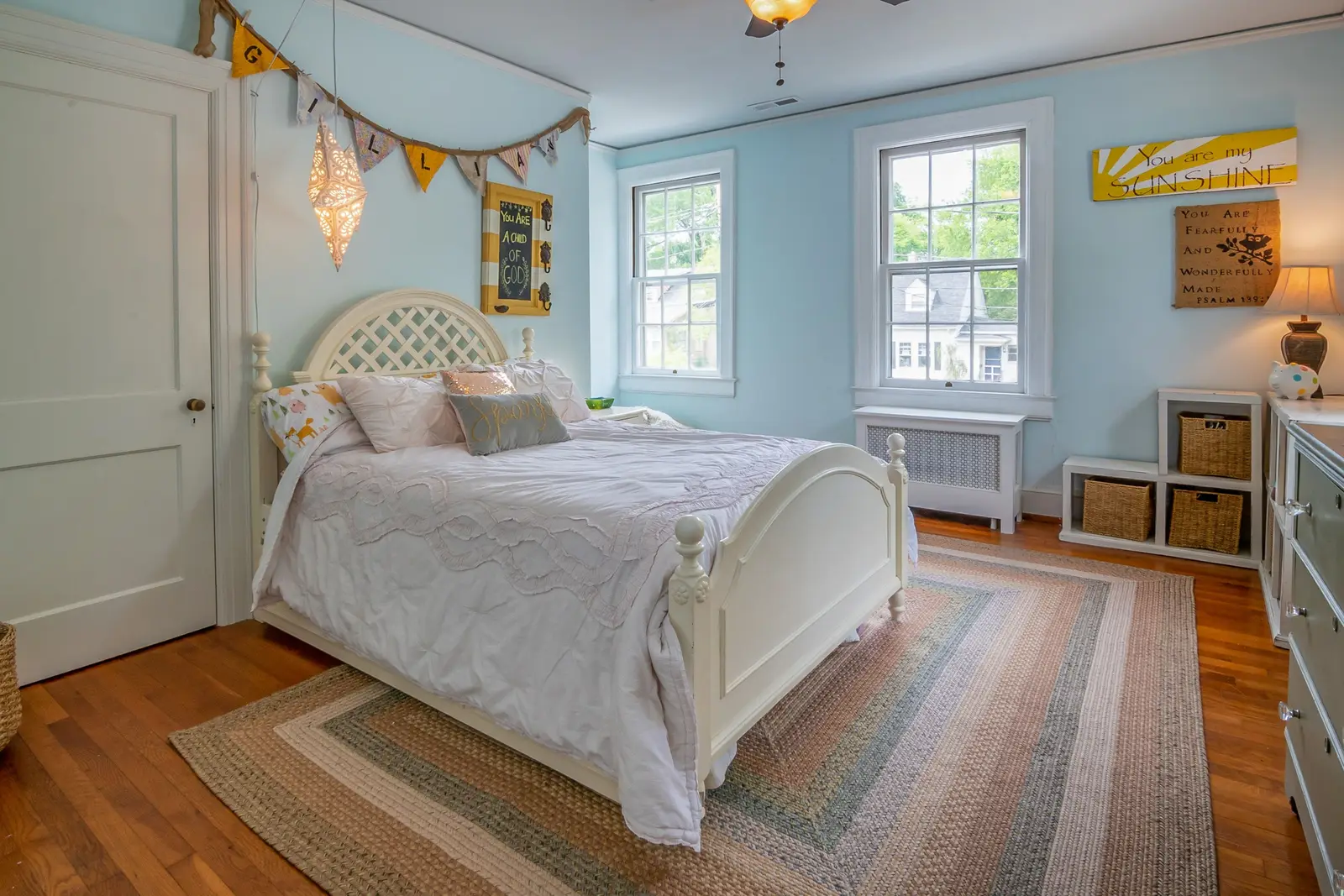
Vintage rug headboard: 60 cm to 240 cm is the size range
Hung flat and centred, a vintage rug does the job of a headboard without the frame. The sizing rule, the fixings that hold a wool rug, and the version renters can build.
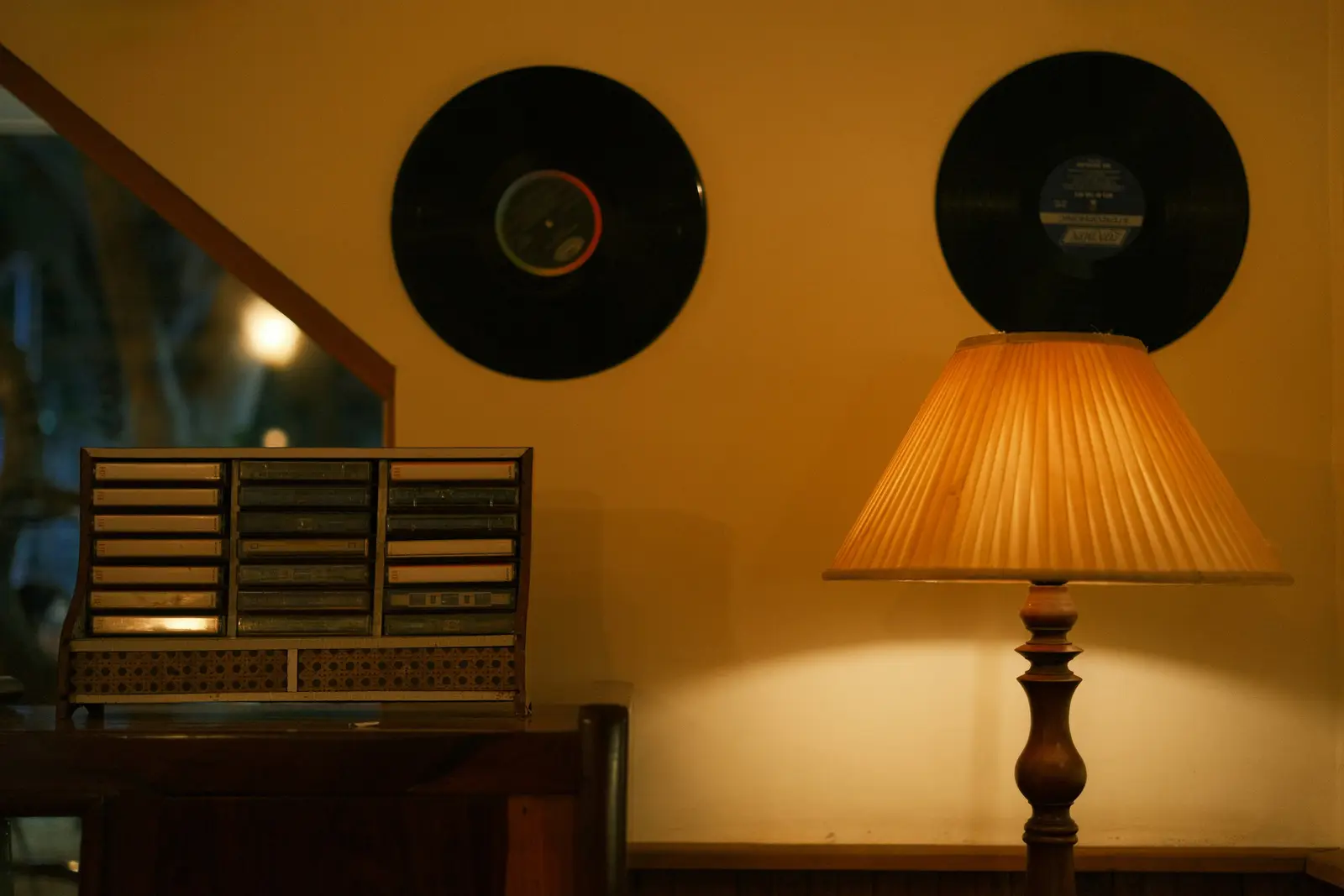
Make a CD case lamp with eight panels and a 5-9W LED only
Clear CD jewel case fronts, relief paint and tinted PVA glue make a square faux stained glass lampshade. It takes an evening and about €15-20, and the bulb must be LED.

Before the sofa arrives: measure the room and the route
Measure doorways, stair turns and the lift before you order a sofa, then protect the walls you just painted. A pre-delivery checklist with tools, costs and what goes wrong.