 DIY Proof
DIY holiday decorations ideas: what to buy, what to build, what to skip
LED strands do most of the work in a good outdoor display. What to buy, three real displays worth copying, and the order to hang it all in before the frost.
Some links in this article are affiliate links: if you buy through one, we may earn a commission at no extra cost to you. As an Amazon Associate we earn from qualifying purchases. How affiliate links work here
The best holiday decorations ideas are the ones that keep working: LED lights doing the heavy lifting, one big shape in the yard, and props that store flat. Budget half a day for a single-storey frontage, and a weekend if you plan to build or paint anything.
Start with the lights
Jennifer Klestinez owns a lighting installation company in upstate New York and posts as @thebrightboss. Her advice to the New York Post was to skip incandescent bulbs entirely. "They get hot, you can't string many together, they use a lot more energy and the glass shatters." She sent a list of LED picks, and Home Depot's Lance Allen, landscaper Stephen Dunkelberg and Lowe's Monica Reese recommended LED sets as well.
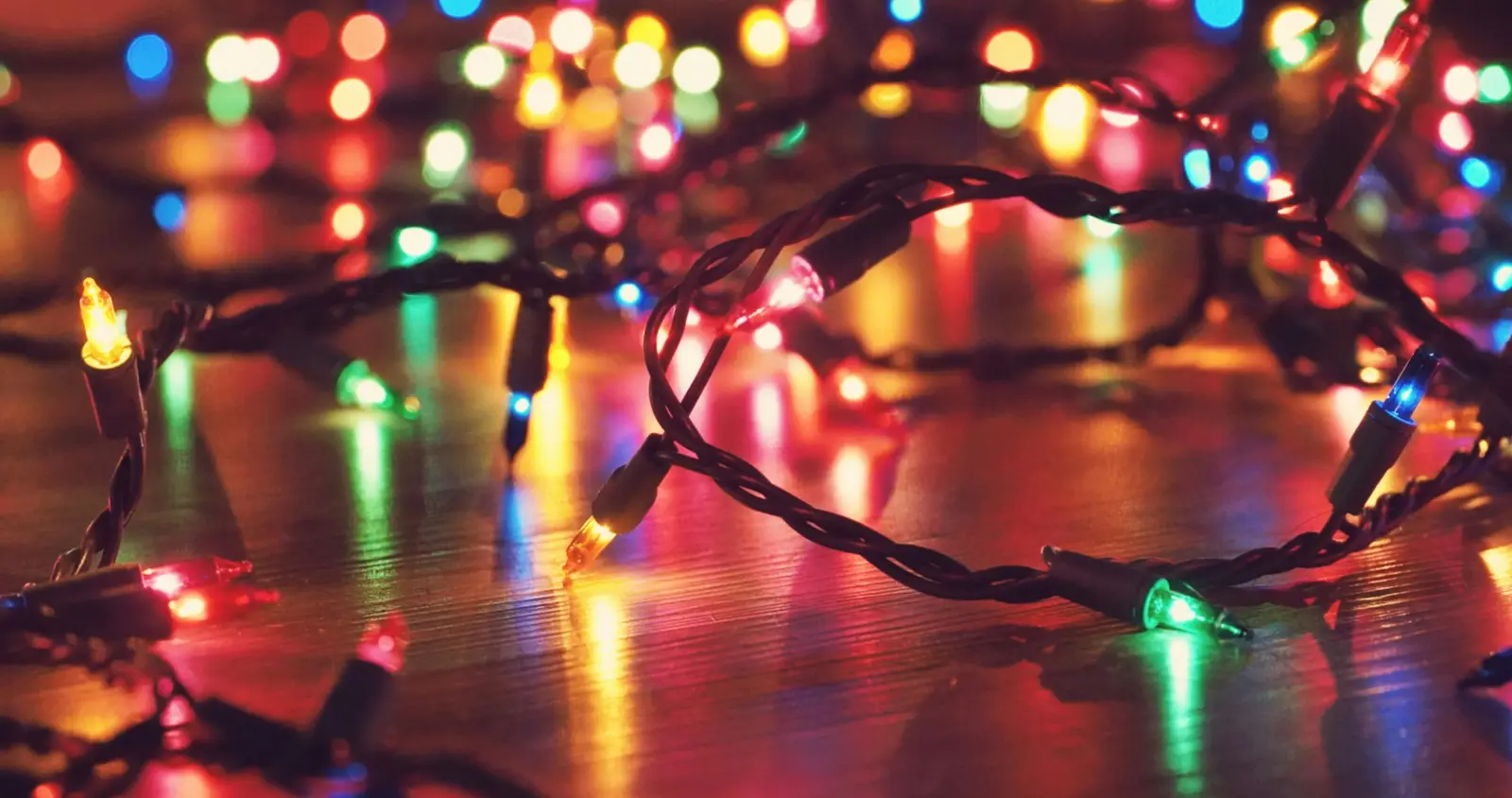
The set that came out on top was Wintergreen Lighting's SoftTwinkle, sold in 17-foot strands (about 5.2 m). The bulbs pulse on their own instead of in one block, which gives a real twinkle effect. Colours run from warm white through blue, gold, green, orange, red and multicolour. The acrylic bulbs are shorter and less pointed than standard Christmas lights, so one stepped on in the dark is less likely to kill the strand. Some buyer reviews report failures inside a year, so keep the receipt and buy where returns are straightforward.
Wintergreen Lighting SoftTwinkle
The bulbs pulse on their own instead of in one block, which gives a real twinkle effect.
Two things make a strand look good after dark: colour temperature and coverage. Keep the house in one temperature, warm white along the walls and gutter, and save the coloured sets for the props. A frontage that mixes warm and cool white looks untidy even when the props are good, and bare bulbs with big gaps between them read as a half-finished job. Buy the length you measured, not the length that was on offer.
Ideas worth copying from the loudest houses
The over-the-top houses are the cheapest place to find ideas. Almost all of the effect comes from repetition and placement, and you can copy a piece of it without spending a fortune.
- Pumpkin House, Salt Lake City. Hundreds of jack-o'-lanterns cover the roof, porch and yard, and the pile works in daylight as well as at night. The owners mount faux pumpkins to long boards so they sit on the roof in rows instead of being balanced one at a time.
- Kraken House, New Orleans. Inflatable tentacles curl out from the windows and suggest something under the house. The props set the shape; green and purple solar up-lights do the rest of the work.
- Vintage black cat porch, Cold Spring Harbor. A wooden cat, carved and painted by hand, sits on a porch framed with dead branches and faux botanicals. The frame gives the door a shape and a little sparkle at the edges.
Scale any of these down for a normal front garden. A set of three 28-inch (71 cm) candy cane pathway markers lights the walk to the door. LED strips run along a porch column or a roofline where clips will not hold. A light-up snowflake or an inflatable on the lawn fills the middle ground, and one carved or painted cut-out gives the whole display a face. The E! Online roundup leans on the same mix of strips, lawn figures and inflatables, which tells you where the volume is.
Aim the light at the prop
The New Orleans house works because the up-lights sit under the tentacles and throw light up the wall. Do the same on a smaller scale: two solar up-lights on the ground beneath a prop, angled back at the house. Keep them off the walking line so nobody kicks them over, and check the aim after dark with the porch light off. Half of the aiming you do in daylight is wrong.
Path lights do a different job. They mark where to walk, so point them at the ground and keep them dim. Bright path markers on a narrow frontage wash out the props behind them, and then you have spent money on a display nobody can see.
What usually goes wrong
- Roof line work without the right clips. Plastic gutter clips hold strands without piercing the cable. Staples and nails cut insulation, and that is how a strand ends up tripping the RCD in the rain.
- Indoor sets used outside. Check the rating on the plug. A set marked for indoor use will not survive a wet week, whatever the box photo suggests.
- Too many strands joined end to end. The limit is printed on the label and it is lower for incandescent than for LED. If the plug feels warm, you have gone past it.
- No RCD on the outdoor socket. Outdoor sockets should be RCD protected. If yours is not, or you need a new one fitted, that is a job for a qualified electrician.
- A tangled box in January. How you pack the lights at the end of the season decides how much of the display survives to the next one.
How to hang a display that survives the weather
- Time:
- About half a day for a single-storey frontage, and a weekend if you are building and painting props.
- Difficulty:
- Moderate. Every connection is plug-in, but the ladder and roof work carries the risk.
- Cost:
- Our sources do not publish prices. Cost follows total strand length and the number of props, so measure the runs and price by the metre before you buy.
Tools: Tape measure, Stepladder, Gutter clips, Cable ties, Outdoor extension lead with RCD protection, Cable reel for storage, Plug-in timer
Materials: LED light strands rated for outdoor use, Solar up-lights, Path markers, Long boards for roof props, Spare fuses and bulbs
- 01
Measure the run before you buy
Measure the gutter line, the door frame and the walk. Add a little for sag between fixings and for corners. Total metres decide how many boxes you need, and buying by length beats guessing from the photo on the box.
- 02
Test every strand indoors
Plug in each set on the kitchen floor before anything goes up a ladder. A dead section is a return, and returning it is far easier from the ground than from the top of the steps in the cold.
- 03
Plan the power
Find the outdoor socket first. Run one RCD-protected supply, keep every connection out of standing water, and check the rating on the extension lead against the total load on the run.
- 04
Hang from the top down
Clip the gutter run first, working along the frontage, then drop down the verticals. Two people make a ladder job faster and safer than one, because someone on the ground can steady the ladder and hand up clips.
- 05
Light the props from below
Set two up-lights under each prop, angled at the wall behind it. Aim them after dark. Coloured light belongs on the props; the house stays warm white.
- 06
Set a timer and label everything
A plug-in timer saves you the nightly job and keeps the display consistent. Label each strand with where it hung, then coil it onto a reel before it goes in the box.
Storing it so next year takes an hour
Take the display down in daylight and in dry weather. Coil each strand around a reel or a piece of card, tape the plug to the end of the coil, and write on the card where that strand hung. Roof props come apart and store flat. Anything painted gets a touch-up before it goes into the box, because a chipped edge is always worse by the following winter.
Questions people ask before they start
- Are LED Christmas lights better than incandescent?
- Yes for outdoor use. LED strands run cooler, join in longer runs and draw less power. Installer Jennifer Klestinez told the New York Post that incandescent bulbs get hot, limit how many you can string together and shatter. The trade-off is a higher price per strand.
- How many light strands can I connect end to end?
- Whatever the label on the strand says, and no more. Incandescent sets allow far fewer joins than LED sets. Compare the total load against both the plug rating and the extension lead rating, and work to the lower number.
- What are the best holiday decoration ideas for a small front yard?
- One focal point and a lit path. A single prop lit from below with two solar up-lights, plus three candy cane markers to the door, reads clearly from the street and fits a narrow frontage better than five small props competing for attention.
- Do I need an electrician for outdoor Christmas lights?
- Not for plug-in strands. You do for a new outdoor socket, a repair to the fixed wiring, or anything that means opening the consumer unit. That work is regulated in most of Europe and needs a qualified electrician.
- How do I stop my display looking messy?
- Keep the house in one colour temperature, hide the cable runs behind the gutter line or a downpipe, and aim coloured light at the props only. Loose cable hanging below the gutter is what makes a display read as clutter rather than as decoration.
Sources
Next projects
Vintage rug headboard: 60 cm to 240 cm is the size range
Hung flat and centred, a vintage rug does the job of a headboard without the frame. The sizing rule, the fixings that hold a wool rug, and the version renters can build.
Bathroom wall color ideas: what looks wrong under warm light
Small bathrooms live or die by the bulb above the mirror. How to test a wall color properly, which finish wipes clean, and the prep that decides whether the result looks flat.
Make a CD case lamp with eight panels and a 5-9W LED only
Clear CD jewel case fronts, relief paint and tinted PVA glue make a square faux stained glass lampshade. It takes an evening and about €15-20, and the bulb must be LED.