 DIY Proof
Vintage rug headboard: 60 cm to 240 cm is the size range
Hung flat and centred, a vintage rug does the job of a headboard without the frame. The sizing rule, the fixings that hold a wool rug, and the version renters can build.
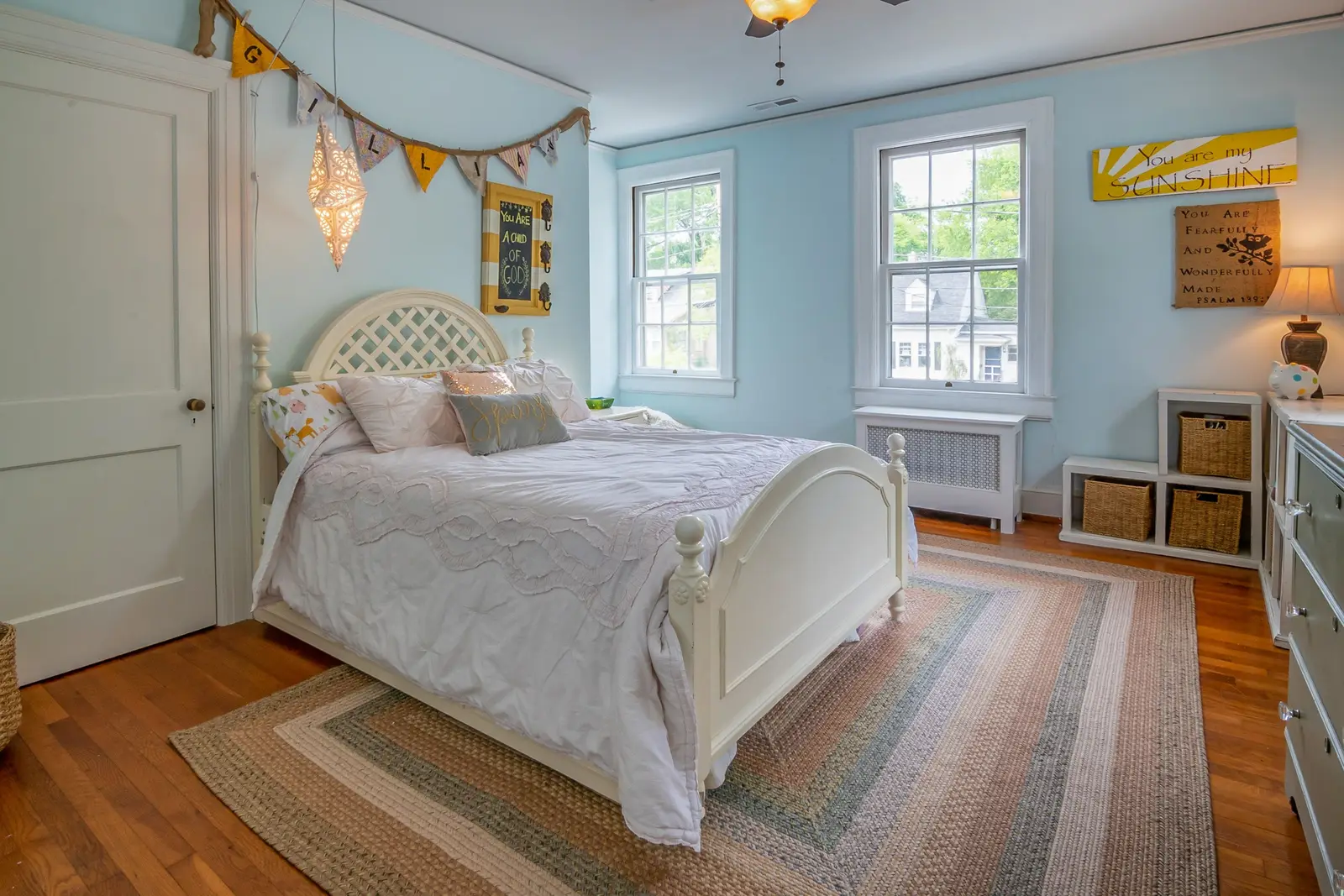
Measure the mattress before you buy anything. A European double is 140 cm across and a queen is 160 cm, and the rug should match that width or beat it by 10 to 20 cm so the edges sit outside the pillows. A textile that comes in narrower than the bed reads as a poster, whatever the pattern is doing.
Why fabric works above a bed
A wool rug or flatweave brings texture at a scale printed canvases rarely reach. One 150 cm piece fills the wall behind a double bed in a single move, and the fabric takes some of the echo out of a room with hard floors. Pattern helps too: marks from pillows and hands that would show on a painted wall disappear into a busy weave.
What size rug to hang over a bed
Ready-made tapestries run from about 60 by 90 cm (2 by 3 ft) at the small end to 210 by 240 cm (7 by 8 ft) at the large end, and the size sold most often for the space over a bed is around 127 by 152 cm (50 by 60 in). Small rugs sit in the same bracket. A 60 by 90 cm prayer rug is the minimum worth hanging over a single bed, and a 120 by 180 cm kilim covers a double comfortably.
Centre the piece on the bed, not on the wall, because the wall may not be symmetrical around the mattress. Keep the bottom edge clear of the pillows: 15 to 20 cm above the mattress top is a workable target, and it stops the fabric being pushed and creased every night. If you want the rug to read as a headboard rather than a wall hanging, let it run 10 to 20 cm past the mattress on each side.
Hanging a vintage rug as a headboard
Weight decides the method. A printed tapestry will hang from a rod and two brackets; a hand-knotted wool rug of 150 cm or more needs a batten screwed into the timber behind the plaster. Neither source for this article quotes prices, so treat the rug as the whole budget and the fixings as small change. Budget one to two hours for a batten, or half a day if you build framed panels.
- Time:
- 1 to 2 hours for a batten and sleeve; about half a day for framed panels
- Difficulty:
- Moderate. Anything wider than 150 cm needs two people to lift and level.
- Cost:
- No price is published in the sources. The rug is nearly all of the cost; batten, screws, sleeve fabric and a dowel are the cheap part.
Tools: Tape measure, Spirit level, Stud finder or magnet, Drill with wood and masonry bits, Screwdriver, Staple gun, Needle and thread or a sewing machine, Pencil
Materials: Vintage rug or flatweave, 45 by 45 mm timber batten, cut to the rug width, Wood screws long enough to bite into the studs, Wall anchors for any section without timber behind it, Cotton fabric for a rod sleeve, Velcro strip or iron-on hemming tape, 20 mm dowel for the bottom edge
- 01
Measure the bed and mark the centre
Run the tape across the mattress and write the width down. Find the centre of the wall space above the bed and pencil a vertical line. Every fixing after this hangs off that line.
- 02
Find the studs before you drill
A stud finder or a magnet run across the wall will show where the timber sits. Mark the stud positions at the height you want the top edge. Plasterboard on its own will not hold a wool rug.
- 03
Fix the batten level
Cut the batten to the rug width and screw it into the studs with the spirit level resting on top. Two screws per stud. The batten carries the load and the rug hangs from the batten.
- 04
Sew a sleeve or a Velcro strip
Sew a cotton sleeve along the top edge of the rug, or use iron-on hemming tape if you don't sew. Velcro stapled to the batten and stitched to the sleeve lets you take the rug down for cleaning.
- 05
Hang it and weight the bottom
Slide the sleeve onto the batten, then thread a dowel through a sleeve at the bottom edge so the rug hangs flat instead of curling into the room. Check that the bottom edge clears the pillows by 15 to 20 cm.
- 06
Check what the fabric covers
Sockets, switches, radiator valves and lamp cables all have to stay reachable. If the rug would sit over a socket, move the rug or the socket. Never leave a connection buried behind fabric.
The framed panel version
Instagram creator Yadi La Brada built hers from two whitewashed wooden panels, glued a blue and white floral fabric to each, framed them in timber and set a warm wall light inside the frame. Boards are easier to get level than a loose textile and they stop a thin flatweave curling at the edges. Glue is permanent, so a rug with real age is the wrong material for that method. Use a length of furnishing fabric, a strip of wallpaper, or a rug that already has holes in it.
The lights are the part to slow down on. A wall light set into a frame needs a cable run to a circuit, and in most of Europe adding a lighting point is work for a qualified electrician. Plug-in wall lights or rechargeable ones give you the same pool of light without opening the wall.
What usually goes wrong
- The fixing fails first. A large wool rug is heavier than any tapestry, and plasterboard plugs pull out of the wall under that load. Get into studs or through a batten.
- The pattern fights the bedding. One of the two needs to be plain, so a bold rug goes with a white duvet and a patterned duvet goes with a quiet weave.
- Old dyes fade. A south or west-facing wall will bleach a vintage rug over a few summers, so check the light before you commit a good piece to it.
- Second-hand wool arrives with moths. Look for holes and bare patches before it goes on the wall, and vacuum it monthly with a brush attachment.
If you rent
Adhesive hooks carry a stated load, and a wool rug will usually beat it. Check the rating against the actual weight of the piece rather than guessing. A tension rod between two close walls holds a light flatweave, and a fabric-covered board standing on the floor behind the bed needs one small fixing at the top to stop it tipping. Any of these beats a rug that comes down in the night.
Questions about hanging a rug as a headboard
- Can I use a heavy wool rug as a headboard?
- Yes, if it goes into timber. Screw a batten into the studs and hang the rug from that. Plasterboard anchors alone are not enough for a wool rug of any real size, and the failure happens at night when the wall is loaded by pillows.
- How wide should a rug be over a double bed?
- About 140 cm, matching the mattress. A 120 cm rug looks narrow over a double, and 150 to 160 cm gives you the overlap that makes the textile read as a headboard rather than a wall hanging.
- Can I hang a vintage rug without drilling?
- Only if it's light. Adhesive hooks have a load rating you can check, and a wool rug usually exceeds it. A tension rod suits a thin flatweave, and a fabric-covered board leaning behind the bed with one top fixing is the safer no-drill route.
- Does a rug behind the bed make the room dustier?
- Wool holds dust, so yes, a little. Vacuum it once a month with a brush attachment, and give it a proper clean before it goes up if it came from a flea market or a house clearance.
- Can I cut a rug down to the right width?
- You can, but a cut rug frays and loses most of its value, and a vintage piece will never look right with a trimmed edge. Buy the size you need, or mount the rug on a board and let the board set the width.
Sources
Next projects
Bathroom wall color ideas: what looks wrong under warm light
Small bathrooms live or die by the bulb above the mirror. How to test a wall color properly, which finish wipes clean, and the prep that decides whether the result looks flat.
Make a CD case lamp with eight panels and a 5-9W LED only
Clear CD jewel case fronts, relief paint and tinted PVA glue make a square faux stained glass lampshade. It takes an evening and about €15-20, and the bulb must be LED.

Before the sofa arrives: measure the room and the route
Measure doorways, stair turns and the lift before you order a sofa, then protect the walls you just painted. A pre-delivery checklist with tools, costs and what goes wrong.