 DIY Proof
Best mechanic tool sets: the DeWalt 142-piece pick and when to skip it
The DeWalt DWMT73802 142-piece kit is the best mechanic tool set for most people. When the Deko 258-piece and Gearwrench 232-piece sets make more sense.
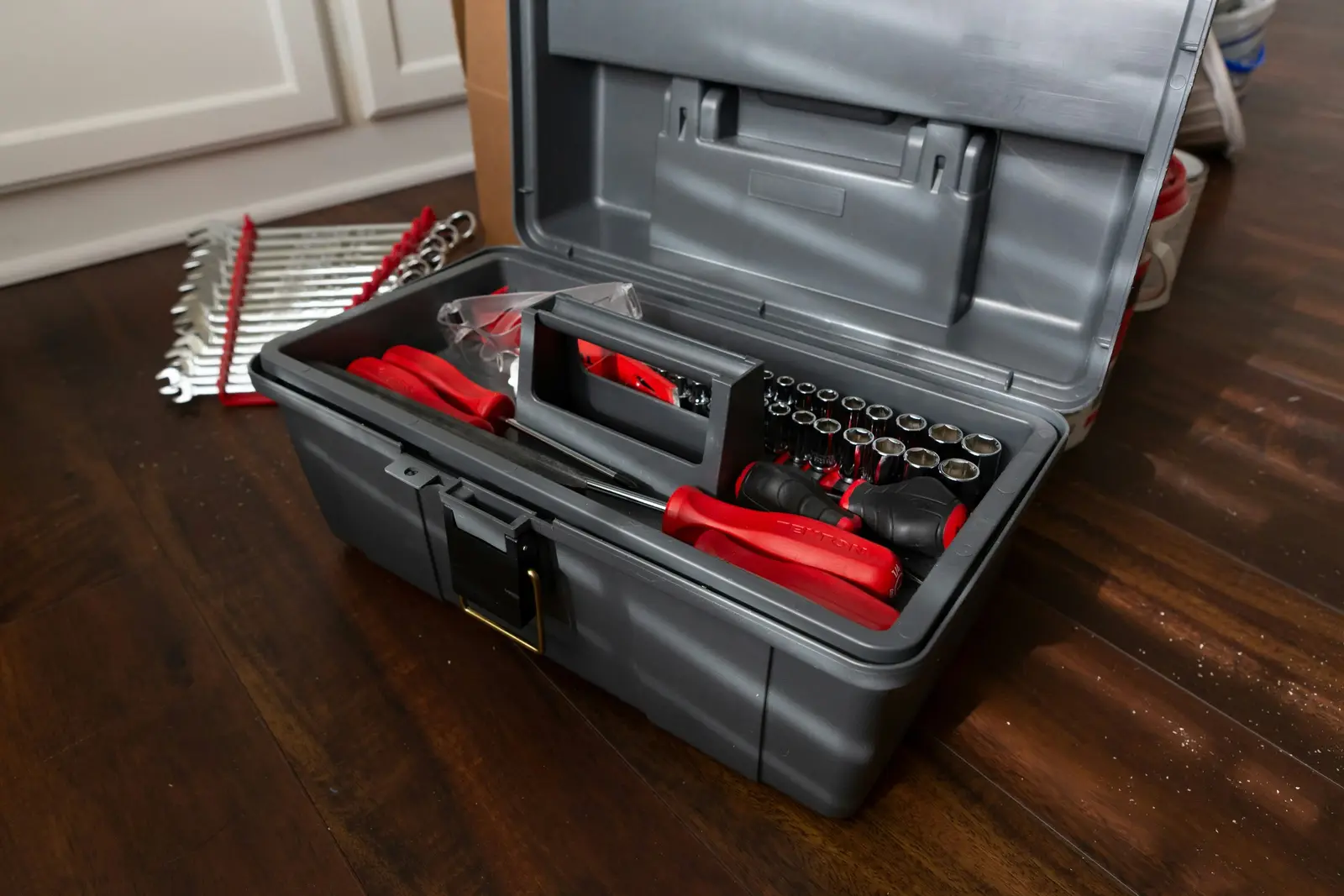
The best mechanic tool set for most people is the DeWalt DWMT73802. Bob Vila's review team made it their overall pick after putting the leading kits through side-by-side testing, and the reasons are unglamorous in the right way: the sockets seat properly on fasteners, the steel quality is consistent from the 8mm up to the biggest socket, and the case is compact enough to carry out to the car. If value matters more than refinement, the Deko 258-piece kit is the cheaper route. If you're under a car most weekends, the Gearwrench 232-piece set is the one to save for.
The four sets worth comparing
- DeWalt DWMT73802, 142 pieces. Best overall. Sockets click onto fasteners with no wobble, construction is consistent through the kit, and the compact case travels well. The kit includes adapters for a power driver.
- Gearwrench 232-piece set. The professional's choice in the same review. Broad coverage and good steel, aimed at someone doing regular maintenance at home rather than a one-off brake job.
- Deko 258-piece kit. Best bang for the buck. Wide coverage for household jobs, but the review found it lacks depth once you get into real mechanical work.
- Stanley STMT75064. Best for the car. Small and tough for roadside fixes and emergency use. It is not built for intensive work.
Why 258 pieces can be the weaker set
The Deko carries 116 more pieces than the DeWalt and still lost the top spot. Piece counts are inflated by hex keys, screwdriver bits, pliers and odd fittings that are handy around the house and useless when a caliper bolt is seized. What matters is the socket run in each drive size, and whether that run has gaps.
Lay the sockets out in order before you buy and look for holes. A set that jumps from 14mm to 17mm will let you down the first time you meet a 15mm or 16mm nut, which is common on modern cars. Filler pieces feel generous in the shop and cost you a second trip once you're under the car.
What separates a set that lasts from one that rounds bolts
Bob Vila's review names chrome vanadium and stainless steel components as the mark of a kit worth owning. Soft steel deforms under load, and a socket that has deformed takes the corners off a nut instead of turning it. You end up with a rounded fastener and a worse problem than the one you started with.
The ratchet is the part that fails first. A coarse ratchet needs a lot of swing room, which you rarely have next to a brake caliper or under a dashboard. Feel the back-drag on the one in the box before you commit to it, and check that the direction lever doesn't slip mid-turn.
Socket profile matters as much as steel. A 6-point socket grips more of the flat and is much less likely to round a stubborn bolt; a 12-point is easier to line up in a cramped space but more forgiving of a bad fit than it should be. A set with both covers more situations than one that only offers 12-point.
Metric or imperial, and which drive sizes
Most cars sold in Europe and Asia use metric fasteners. Older American vehicles, garden equipment and plenty of household plumbing are imperial. Kits often pad the count with imperial sizes you'll never touch, so count the metric sockets first if that's what your car needs.
On drive size, 3/8-inch covers most car work. A 1/4-inch drive is what you'll reach for on interior trim and small fasteners, and 1/2-inch is for wheel nuts and suspension bolts where you need leverage. A set that gives you all three is worth more than one with a longer list of sockets in a single size.
How to check a set before you pay for it
Most of the decision happens in the shop, with the kit open in front of you. Twenty minutes of checking saves the return postage and the afternoon you lose to a socket that won't grip.
- Time:
- 20 to 30 minutes
- Difficulty:
- Easy
- Cost:
- No extra cost beyond the set itself. Kit prices vary by retailer and change often, so check current listings before you buy.
Tools: The kit you're considering, out of the case, A 10mm and a 13mm bolt to test socket fit, A torch for looking into the case mouldings, Your car's wheel brace for comparison
Materials: Masking tape, A marker, A note on your phone listing your car's fastener sizes
- 01
Count sockets, not pieces
Ignore the headline number. Count the sockets in each drive size and write the totals down. Hex keys and screwdriver bits are not what loosens a suspension bolt.
- 02
Line the sockets up and look for gaps
Lay them out in order on the counter. Any jump in the metric run tells you which nut will stop the job. Write down the sizes you'd have to buy separately and price those in.
- 03
Fit a socket to a real fastener
Try a 10mm and a 13mm bolt, or ask to test the display set on a wheel nut. A good socket clicks on with no side-to-side play. A loose one rounds corners once you put force through it.
- 04
Work the ratchet both ways
Turn it forward and back a few dozen times. Listen for a clean click, feel for back-drag, and flick the direction lever under light load to see whether it holds. This is the first component to fail.
- 05
Check the case and hinges
The case is what keeps the set usable in five years. Blow-moulded trays hold sockets in place; a flimsy hinge drops the whole lot into a footwell. Open and close it a few times.
- 06
Confirm what happens if a socket splits
Ask about the return window and whether single sockets can be replaced. A set with no route to a replacement part is a one-shot purchase.
Which one to buy
For a first set that has to handle brakes, battery terminals and the odd furniture assembly, take the DeWalt DWMT73802. It's the pick I'd buy with my own money, and the compact case means it actually comes out of the garage.
Choose the Deko 258-piece kit if you're equipping a flat and most of the work is bikes, flat-pack and light repairs. Skip it if you plan to service a car, because the depth isn't there where it counts. Go to the Gearwrench 232-piece set instead if you do your own servicing and want one box that covers the job.
The Stanley STMT75064 is a boot kit. Put it in the car, leave it there, and don't expect it to run a weekend engine job. Anyone buying a 500-piece set for the piece count is buying filler; the money is better spent on a smaller set with no gaps plus the two or three sockets you actually need.
Frequently asked questions
- Are 200-piece tool sets worth it?
- Only if those pieces are sockets and wrenches you'll use. In Bob Vila's review, a 258-piece kit lost to a 142-piece kit because the extra pieces were household filler rather than mechanical depth. Count sockets in your sizes before you pay for a bigger number.
- What size socket set do I need for a car?
- Start with 3/8-inch drive and a metric range from 8mm to 19mm with no gaps. Add 1/2-inch drive for wheel nuts and suspension bolts, and 1/4-inch for interior trim and small fasteners. A set with all three drive sizes beats a longer list in one.
- 6-point or 12-point sockets?
- 6-point for anything tight or rusty, because it grips more of the flat and is less likely to round the head. 12-point is easier to line up in a cramped space. A set that includes both covers more situations than one that only offers 12-point.
- Is chrome vanadium steel good for tools?
- Yes. It's the standard alloy for hand tools and it flexes rather than shattering. Bob Vila's review named chrome vanadium and stainless steel as the materials that separate a durable set from a cheap one. Be wary of sockets with no alloy marked on them.
- Can I use a mechanic tool set for flat-pack furniture and bikes?
- Yes, and a 1/4-inch drive set handles most of it. Keep a cheap household kit for furniture and reserve the good set for the car, so you're not hunting for a 10mm socket in a kitchen drawer when you need it under a bonnet.
- Do I need impact-rated sockets?
- No for hand work. Impact sockets are for wheel guns, and they're thicker and softer so they survive repeated hammering. If you use a power driver with a socket adapter, keep the torque low on anything smaller than a wheel nut.
Sources
Next projects
Basic tool kit for beginners: 8 categories, not 80 items
A basic tool kit for beginners is eight categories and a drill, not 200 pieces. Where to spend, what to save on, and the Pozidriv trap waiting in European flat-pack.
Best early Black Friday tool deals: DeWalt, Makita and Ego prices
Battery-included drill kits dropped to $99 at Home Depot, Lowe's and Amazon, and Ridgid's $149 starter kit comes with a free tool. Plus the bare-tool listings to skip.
Best tool gifts for a handyman: Milwaukee picks under $100
The best tool gifts for a handyman are the ones that get used up: bits, blades, tape measures and magnets. Here are eight picks worth buying, plus the tool advent calendars that sell out first.