 DIY Proof
Ryobi's two-stage electric snowblower handles a driveway for less
The best electric snowblower for a driveway is a two-stage cordless machine: 61 cm wide, 53 cm deep, 45 minutes a charge. The catch is how slowly those four batteries recharge.
Some links in this article are affiliate links: if you buy through one, we may earn a commission at no extra cost to you. As an Amazon Associate we earn from qualifying purchases. How affiliate links work here
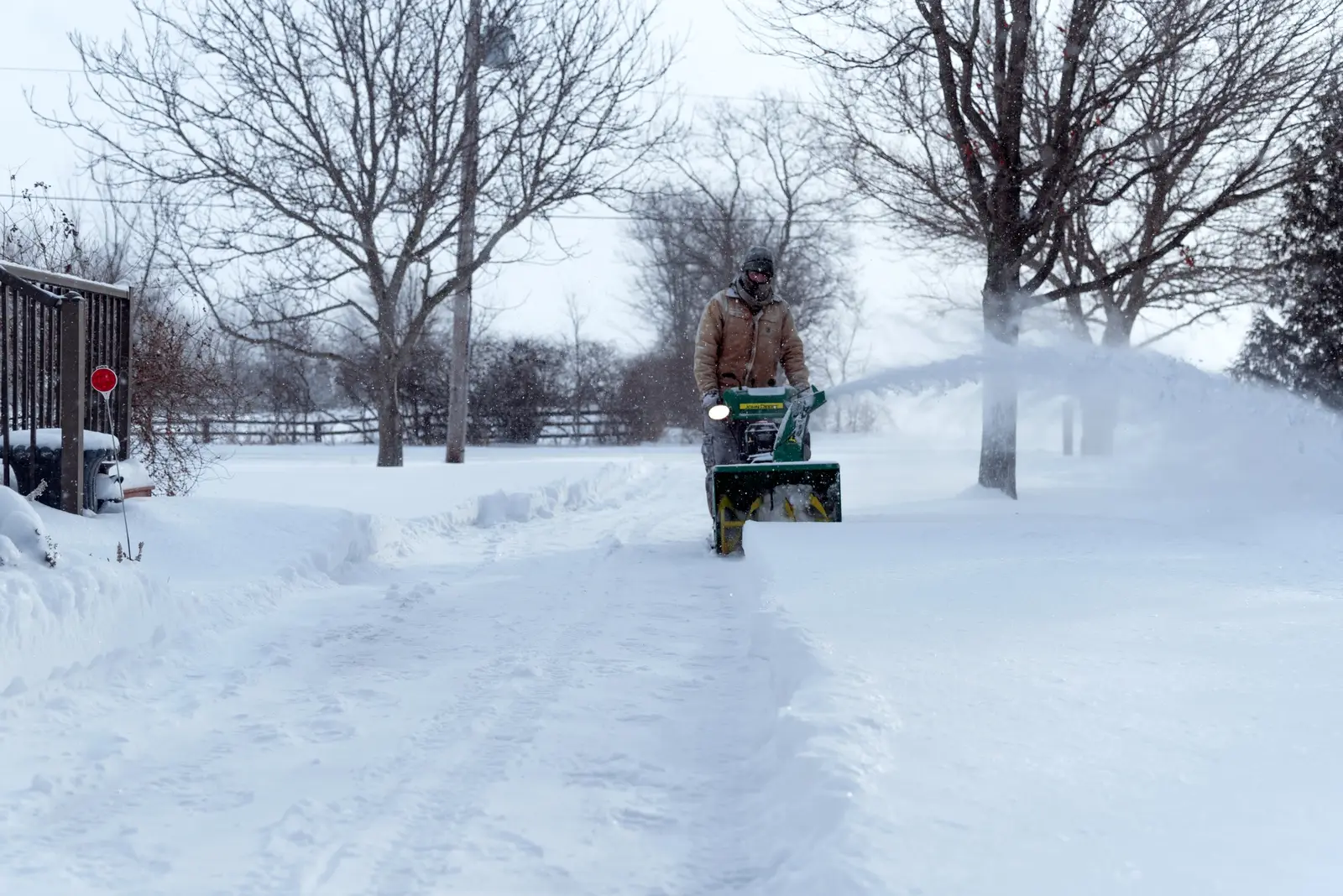
Driveway work belongs to the two-stage class. These machines are self-propelled, so you walk behind and steer while the auger and impeller lift the snow and throw it clear. A single-stage blower drags itself forward on rubber paddles and needs you to push it into the bank. That is fine for 10 cm on flat tarmac and miserable in the ridge the plow leaves at the end of the drive.
Count your passes before you compare models
A driveway is a number of passes, and the number comes from the clearing width. The widest cordless machines cut 61 cm (24 in) at a time. The small single-stage models cut 46 cm (18 in). On a 5 m wide drive that is about eight passes with the big machine and about eleven with the small one, and on a 10 m long drive that is 80 m of walking against 110 m. Three extra passes per strip is what turns a 20-minute job into an hour of pushing, so measure the drive before you read a spec sheet.
Depth matters as much. Cordless machines are quoted at roughly 51 to 53 cm of snow in a single pass, and the scraper bar on a single-stage model can clear right down to the pavement. Anything deeper, or a bank compacted by a plow, means taking the top off first and coming back for the rest.
The pick for a long driveway: Ryobi 40V Brushless Whisper Series two-stage
Ryobi runs this machine on four 40-volt 6-amp-hour batteries and claims up to 45 minutes of work from a set. The company also claims it moves the same amount of snow as a 252 cc gas two-stage, which is the sort of number worth treating as a claim rather than a measurement. Popular Mechanics, which put it in its roundup of the best electric snowblowers, said it may not match gas power but comes close.
The working numbers are a 61 cm wide, 53 cm deep cut and a throw of up to 55 ft, about 17 m. Popular Mechanics also singled out the controls: wheel speed, auger speed, chute direction and the LED headlights all sit on the handlebar, and the grips heat so your hands stay usable in a wind. That cockpit matters more than it sounds. Stopping to crank a chute by hand every three passes is how a 30-minute driveway becomes a 50-minute one.
Pros
- 61 cm cut and 53 cm depth clear most residential drives in one pass per strip
- Self-propelled with wheel and auger speed on the handlebar
- Heated grips and LED headlights for dark, cold evening clearances
- Throws snow up to about 17 m, well past a parked car
Cons
- The rapid charger has two slots, so four batteries need two charging rounds
- Four batteries make it heavy to lift in and out of a shed
- Battery replacement cost sits on top of the purchase price
That charger is the real catch. Popular Mechanics flagged it directly: the rapid charger takes two batteries at a time, so a full set of four needs two rounds before you are back to full power. If your drive takes close to 45 minutes, a second set of batteries is part of the honest cost of this machine, not an accessory.
The pick for a short drive: Snow Joe 24V-X2-SB18
At under 38 lb, about 17 kg with batteries fitted, the Snow Joe 24V-X2-SB18 is light enough to roll out of storage, push down the drive and swing around a turn without planning the manoeuvre. It cuts 46 cm wide and up to 25 cm deep, throws snow around 6 m, and its scraper bar clears down to the pavement. Popular Mechanics called it one of the most affordable cordless blowers it has found. The narrow cut is the compromise: more passes, and a long drive will wear you out faster than the machine will.
Snow Joe 24V-X2-SB18
At under 38 lb, about 17 kg with batteries fitted, the Snow Joe 24V-X2-SB18 is light enough to roll out of storage, push down the drive and swing around a turn without planning the manoeuvre.
The rest of the shortlist
- Ego Power+ SNT2405 self-propelled two-stage: named best overall in the second roundup, the one to price against the Ryobi.
- Ego Power+ SNT2103 21-inch 56-volt: picked for battery life, with a 53 cm cut.
- Greenworks 40V 20-inch cordless single-stage: the value option, 51 cm wide.
- Toro Flex-Force 60-volt Max 21-inch Power Clear: the best of the single-stage machines, 53 cm wide.
Ego Power+ SNT2405 self-propelled two-stage
Ego Power+ SNT2405 self-propelled two-stage: named best overall in the second roundup, the one to price against the Ryobi.
Ego Power+ SNT2103 21-inch 56-volt
Ego Power+ SNT2103 21-inch 56-volt: picked for battery life, with a 53 cm cut.
Toro Flex-Force 60-volt Max 21-inch Power Clear
Toro Flex-Force 60-volt Max 21-inch Power Clear: the best of the single-stage machines, 53 cm wide.
What the battery really costs you
Cordless machines start at a button, need little beyond a charged pack and a clean chute, and run quietly enough that a 7 am clearance will not empty the street. They also produce no exhaust, which matters if you store the blower in a garage attached to the house. The trade is energy: every pass you make costs runtime, and the pass count comes from the width of the cut. A wide two-stage on a drive it suits uses less battery per square metre than a narrow single-stage you have to walk up and down three extra times.
Plan the charging, too. Two slots and four batteries means charging in pairs, and a cold shed is not where you want to discover a flat pack. Keep the spare set indoors and swap it mid-job rather than stopping.
When gas still makes sense
Both roundups put electric below gas on raw power. If your drive is long, gravel, or regularly takes a plow bank taller than the machine's housing, a petrol two-stage will outwork any battery model and keep working through a power cut. For a paved drive of two or three cars, in a place where deep snow is occasional, the cordless two-stage is the easier machine to live with.
- Time:
- 20 to 40 minutes for a two-car driveway, plus two charging rounds for a full set of four batteries.
- Difficulty:
- Low. The hard parts are deep wet snow, slopes and the plow bank at the end of the drive.
- Cost:
- No prices were published in the two roundups used here. Budget for the machine plus a second battery set if your drive takes longer than 45 minutes to clear.
Tools: Two-stage cordless snowblower (or single-stage for a short drive), Spare set of batteries, Two-slot rapid charger, Driveway markers or canes, Stiff broom or shovel for the edges, Eye protection
Materials: Ice melt suitable for your paving, A dry indoor spot for battery storage
- 01
Mark the edges before the first snow
Push canes or stakes along the lawn edge and any gravel margin. Under 20 cm of snow you cannot see the boundary, and the auger will find it for you.
- 02
Charge all four batteries the night before
Run the charger in two rounds, or add a second charger. Swap packs mid-job rather than stopping and waiting.
- 03
Start at the garage and throw downwind
Point the chute away from doors, parked cars and the neighbour's boundary. On the Ryobi you can change chute direction from the handlebar without stopping.
- 04
Take overlapping passes
Overlap each strip by roughly a third of the cut. With 61 cm of width, a 5 m drive takes about eight passes; with 46 cm, about eleven.
- 05
Slow the drive speed in deep snow
The auger needs time to swallow the load. If the chute clogs, stop the machine and clear it with a tool or the supplied scraper, never with your hand.
- 06
Clear the machine and charge before storage
Knock the snow out of the auger housing and chute, let the machine dry, and take the batteries indoors to charge rather than leaving them in a cold shed.
FAQ
Ryobi 40V Brushless Whisper Series two-stage snowblower
Ryobi's 40V Brushless Whisper Series is the closest thing to a 252 cc gas two-stage in the current crop, with one catch: its charger holds two batteries, so refilling all four takes two rounds.
Frequently asked questions
- How wide a path does an electric snowblower clear?
- Between 46 cm and 61 cm. Single-stage models such as the Snow Joe 24V-X2-SB18 cut 46 cm; two-stage machines including the Ryobi 40V and the Ego 21-inch models cut 61 cm. Width sets how many passes your drive needs, so measure the drive first.
- How long does a cordless snowblower run on one charge?
- Ryobi claims up to 45 minutes from its four 40-volt 6-amp-hour batteries. That figure assumes the machine suits the job. A narrow cut on a wide drive means more passes and a shorter real runtime.
- Single-stage or two-stage for a driveway?
- Two-stage for a long or sloped drive and the plow bank at the end of it, because it is self-propelled and throws snow further. A single-stage is lighter, cheaper and quicker to handle on a short flat drive with modest snowfall.
- Can an electric snowblower handle wet, heavy snow?
- Partly. Both roundups put electric below gas on power. A two-stage cordless machine with a 61 cm cut and 53 cm depth setting handles most wet snow on a residential drive. Deep, compacted plow banks may need two passes or a gas machine.
- Do I need spare batteries?
- Yes if your drive takes close to 45 minutes. The Ryobi rapid charger has two slots, so four batteries recharge in two rounds. A second set lets you finish the job and charge everything afterwards.
Sources
Next projects
Lawn mower blade sharpening costs $5 a blade or $70 at the shop
Professional sharpening runs $5 to $15 per blade, or $50 to $70 by Angi's average. What the job costs, how often it's due, and the flat-file method that skips the shop.
Best snow blower for gravel driveways: a two-stage, every time
Single-stage blowers throw gravel, not just snow. Here's the two-stage setup that keeps the auger off the stones, with the models the reviews rate and what to check first.
Best gifts for homes with gardens: 4 picks that earn their shelf space
A wheeled potting cart, an indoor hydroponic unit that fits 16 plants into 1.4 square feet, and the small gifts gardeners actually wear out. What to buy, what to skip, and how to set the cart up.